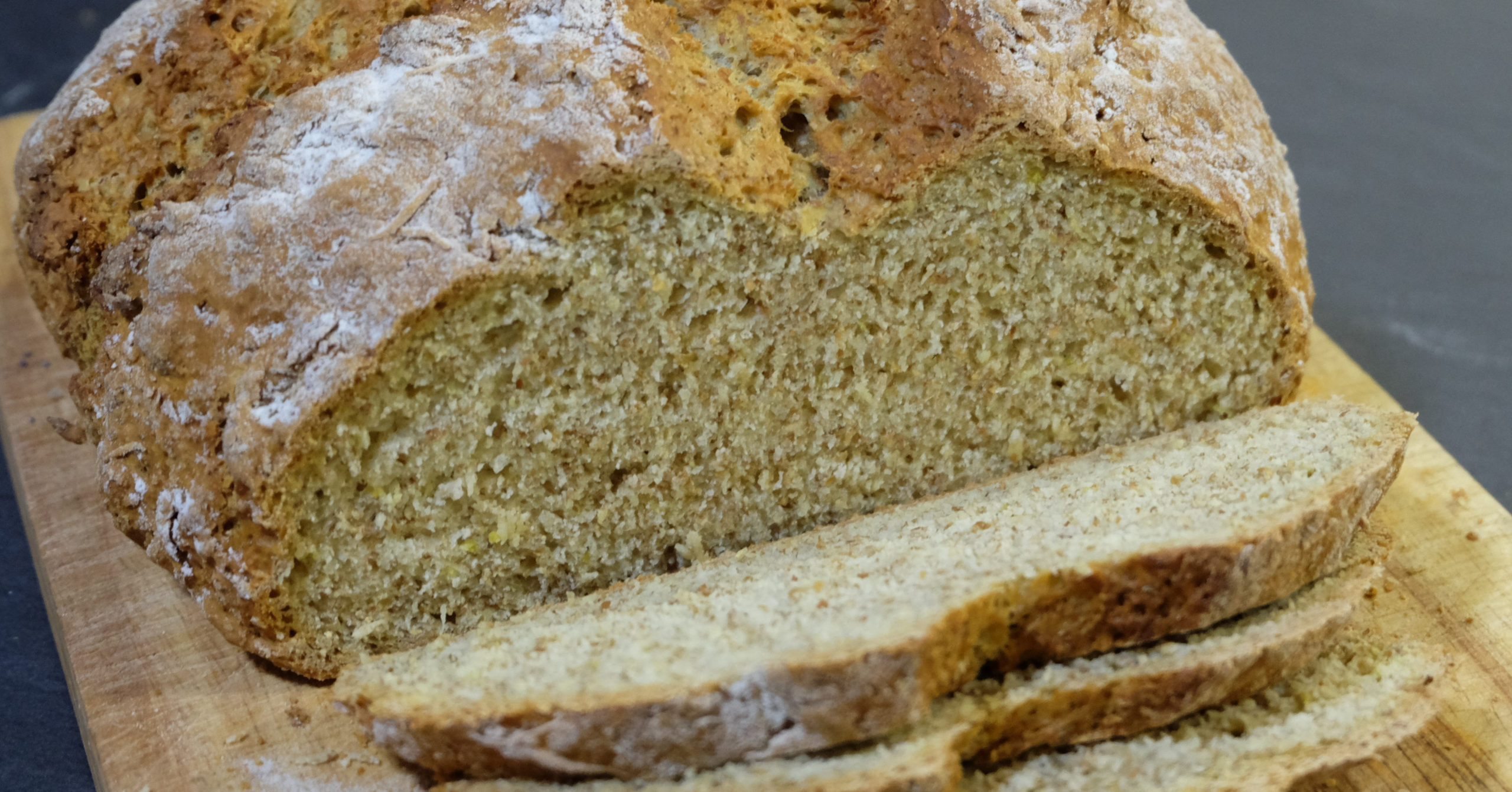
Borodinsky bread

It is suspected this bread recipe got created after the 1918 revolution. I always wanted to try it and here’s my chance.
Podejrzewa się, że ten przepis powstał po rewolucji w 1918 roku. Zawsze chciałem spróbować go zrobić i oto moje podejście.
The recipe comes from Russia and its one of the various rye breads for which countries of Eastern Europe are known for. It’s dense and aromatic. It’s often referred to as the holy grail of bread.
I had my first try in Poland when I went to Pochlebstwo, a microbakery in Kraków. I loved their version and really wanted to see if I could replicate the effect.
The recipes online vary from overly simple to very complicated and with ingredients really difficult to find. I found a slightly simpler recipe that I would like to present. What I like about it is that it only uses rye flour (no wheat) and thanks to use of molasses and barley malt syrup remains dark and sweet.
Before baking
On a side note I really liked some of the complex recipes, for instance the ones including red rye malt like the Borodinsky recipe from Beets & Bones blog. One thing that is a problem to me is that I am unable to find the red rye malt. The authors of mentioned Beets & Bones blog also provide a recipe for red rye malt, and there are also some recipes on The Fresh Loaf forum but I fear I do not have enough skills or tools good enough to actually make it, so I am giving it a pass for now. One day I’ll try.
The original recipe includes preparation of a rye sourdough which I will skip here. Refer to my sourdough recipe for instructions.

Borodinsky
Planning
Timewise you will need about 12-18 hours to make the levain, 6 hours for the rise and about 40 minutes for baking. Add some time of actual work, that shouldn’t be more than 30 minutes including greasing the tin before baking. It is suggested that the bread has a day’s rest before eating. It’s quite common in the recipes, but no one will get upset if you just wait for it to completely cool down – just remember that means more than touch-cold, add two or three hours to the wait.
You will need a bowl, a baking tin to hold about 600 grams of dough, a mixer will come in handy but you can make it by hand.

Borodinsky
Ingredients
Levain
You’ll need a bit less than that, but I tried to provide relatively round numbers.
- 30 g rye sourdough
- 90 g wholemeal rye flour
- 180 g very warm water (at 40 C)
Final dough
- 270 g levain
- 230 g dark rye flour
- 5 g salt
- 5 g coarsely ground coriander and a bit whole to sprinkle the loaf and the tin with
- 20 g molasses
- 15 g barley malt extract
- 90 g warm water (at 35 C)
- a bit of butter to grease the tin

Borodinsky
Preparation
- Mix the ingredients for levain and leave them for 12-18 hours. It will rise and then start imploding – then it’s ready
- When the levain is ready, grease your tin with butter and throw a couple coriander seeds inside – not a lot, the bread will taste like soap if you overdo, as you’ll also put some on top
- Mix all ingredients together – the dough will resemble clay
- Stick the dough in the tin and smoothen the top with a wet hand or spatula (wet things don’t stick) and sprinkle more coriander seeds on top. I tend to do it at this point as it usually sticks better then
- Leave the bread in a warm place for about six hours it should rise by a bit before baking
- When the bread is almost ready, turn the oven on, set it to 220 C degrees with top and bottom heating element (know your oven)
- Put the bread in, add a bit of steam (for instance ice cubes in a baking tray on the bottom of your oven)
- After 10 minutes lower the temperature to 200 C degrees and continue baking for 30 minutes
- When the bread is baked, take it out of the oven and place it on a cooling rack. I would suggest leaving it for at least 12 hours to rest so that he crumb stabilizes – rye crumb is usually quite fragile

Borodinsky
And that’s it. Simple, isn’t it? The bread is very aromatic, it’s quite dense. Not all people like the strong flavour, but I do. It goes pretty well with smoked meats but is also very interesting with butter and salt alone.
I would like to thank Jakub for a great evening session of baking, eating and taking photos. You can see the wonderful effects here, as all pictures but one are his.