Khorasan Wheat Bread
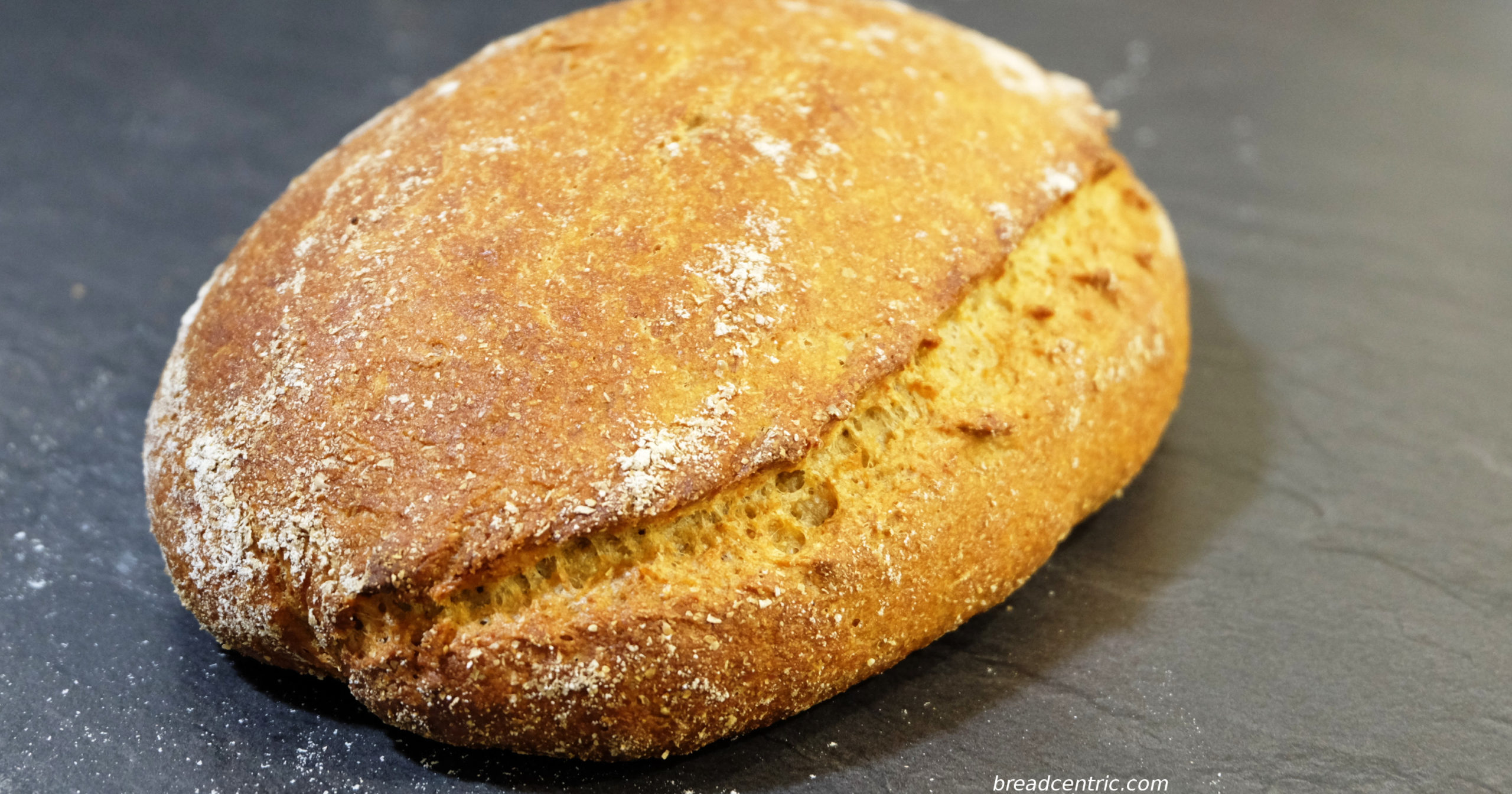
Experimental day has come. I have reached back to ancient land of Khorasan, currently located in Iran and Afghanistan. See how it turned out.
Nadszedł dzień eksperymentów. Sięgnąłem wstecz, do starożytnej krainy Khorasan, obecnie zlokalizowanej w Iranie i Afganistanie. Zobacz jak wyszło.
Why Khorasan wheat? Because I was looking for some weird stuff to put into a bread and this guy popped up. I have heard about ancient grains but never had a chance to try them before. When I was looking for stuff on Shipton Mill’s website, I found this on offer and got a bag. And almost forgot about it. Recently I was looking through the flour cabinet and found it. Yes, we have a flour cabinet in our kitchen – we order a lot of flour, it needs to fit somewhere. Anyway – I found it and decided to use it.
It also made perfect sense to try out new bannetons and a spiral dough hook. You know, big boys and their toys. The hook requires a bit of a special handling – I had to start with less water and wait for the machine to knead the dough at first. Then I was gradually adding more and more water.
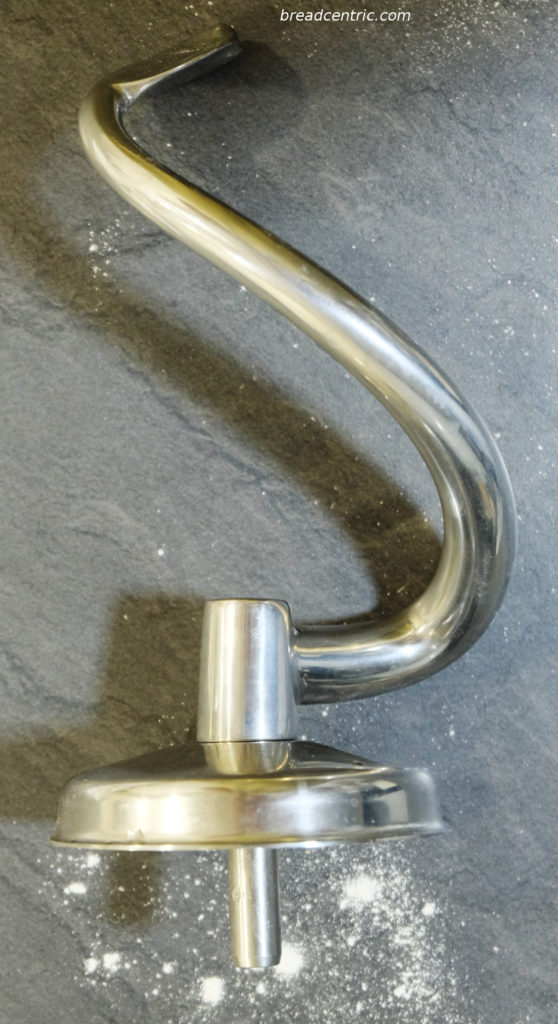
My new toy. Who would have thought I would be ordering fancy stuff without asking for a discreet packaging without the store name on it.
I’ve had no contact with Khorasan wheat flour before. It has an interesting smell, when grabbed between the fingers, it feels like finely ground breadcrumbs. It soaks a lot of water, the recipe calls for 75% hydration, but I went with 72% instead as it already felt quite well hydrated. I think the flour I got was wholemeal (the packaging did not state), but it did feel different in my hands to other flours listed below.
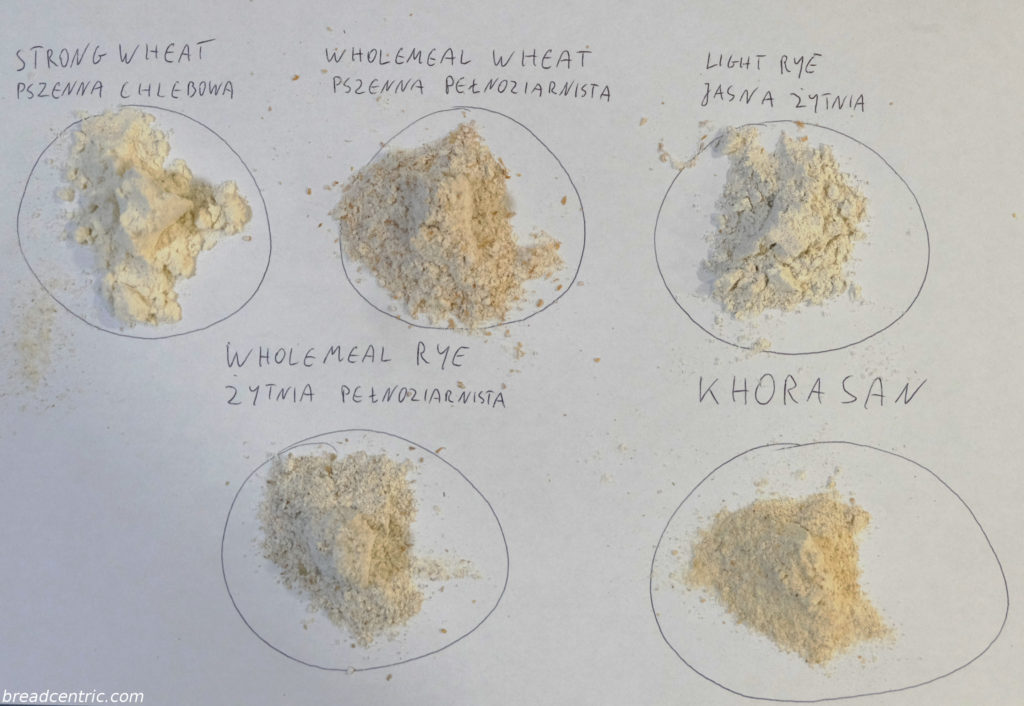
Different flour samples
If I were to compare the dough, I’d say it was a noticeably more loose than wheat, but much easier to manage than the clay-like rye. One could clearly see the gluten structure, but it was quite easy to tear it, so I focused on folding and pressing against the worktop rather than stretching.
I used a quick recipe from Doves Farm website. The result was a bit dry, but satisfyingly filling and tasty.
Planning
None. I started at 7:30 pm and finished at 10 pm. An hour bulk proof, half an hour final proof, half an hour baking. Remember to knock at the bottom to hear hollow sound before removing from the oven.
I used a banneton to proof the dough, but you can use a colander with a clean tea towel dusted with rye flour (it sticks less).
Ingredients
This makes a single loaf weighing 800 grams.
- 500 g Khorasan whole wheat flour
- 360-375 g water
- 10 g salt
- 5 g sugar (could be ignored)
- 4 g dry yeast
Preparation
Mix the dry ingredients in the bowl
Gradually add water and mix until you get a dough with all ingredients incorporated
Leave it for an hour to double in size. Remember: in the hot days it may take much less, in the cold days much longer
Turn the oven on and set it to 200 C with a fan, 220 C without (recommended). Know your oven
Take the dough onto a lightly floured surface and give it a couple folds. Be rather gentle – it’s not a classic wheat dough
Shape the dough and put it into a banneton for 25-35 minutes. Note it will rise faster than the first time
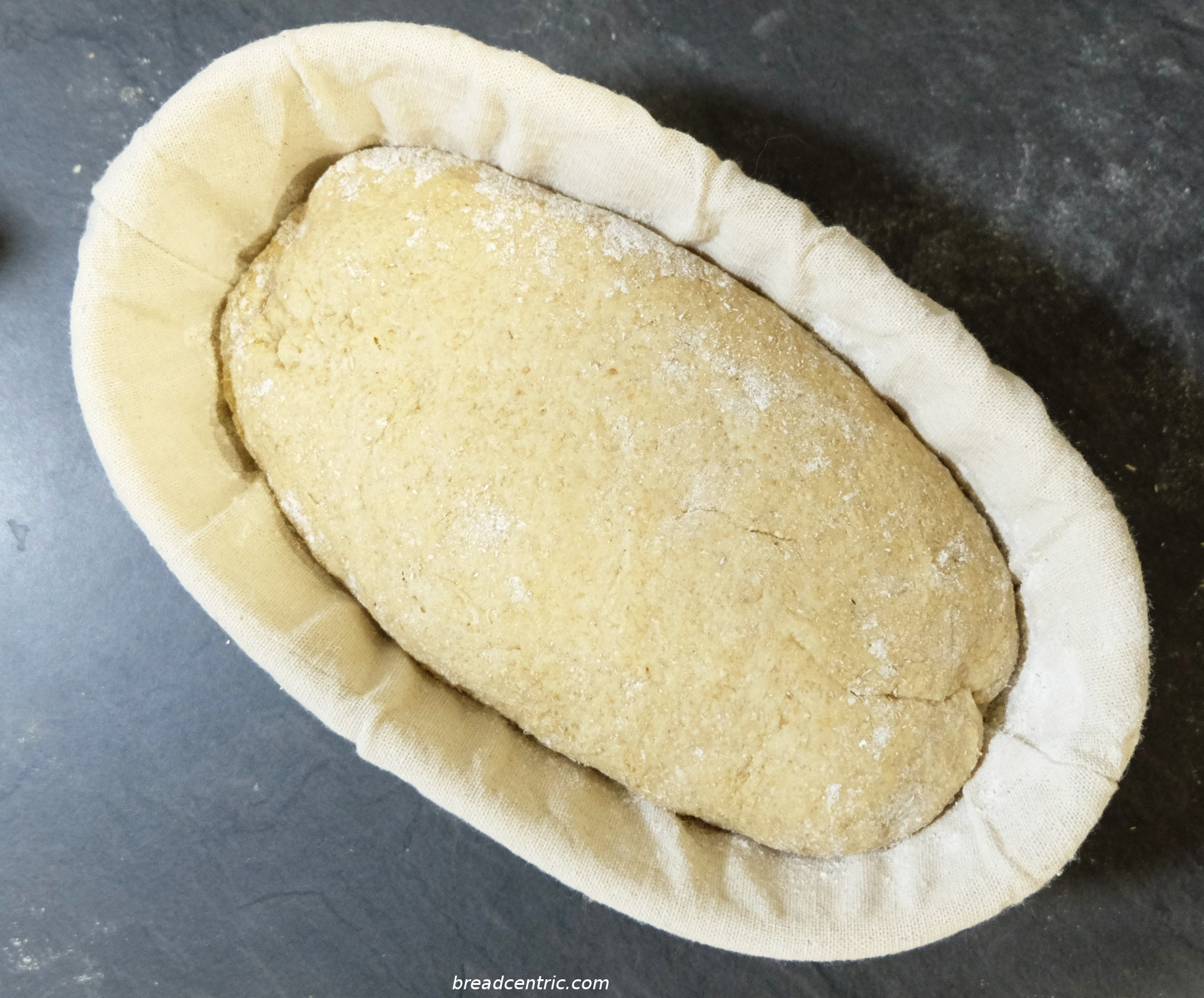
Khorasan wheat bread in a banneton
Pop it into the oven, add steam and bake for about 35 minutes. When knocking on the bottom, it should give a hollow sound
Leave it on a cooling rack
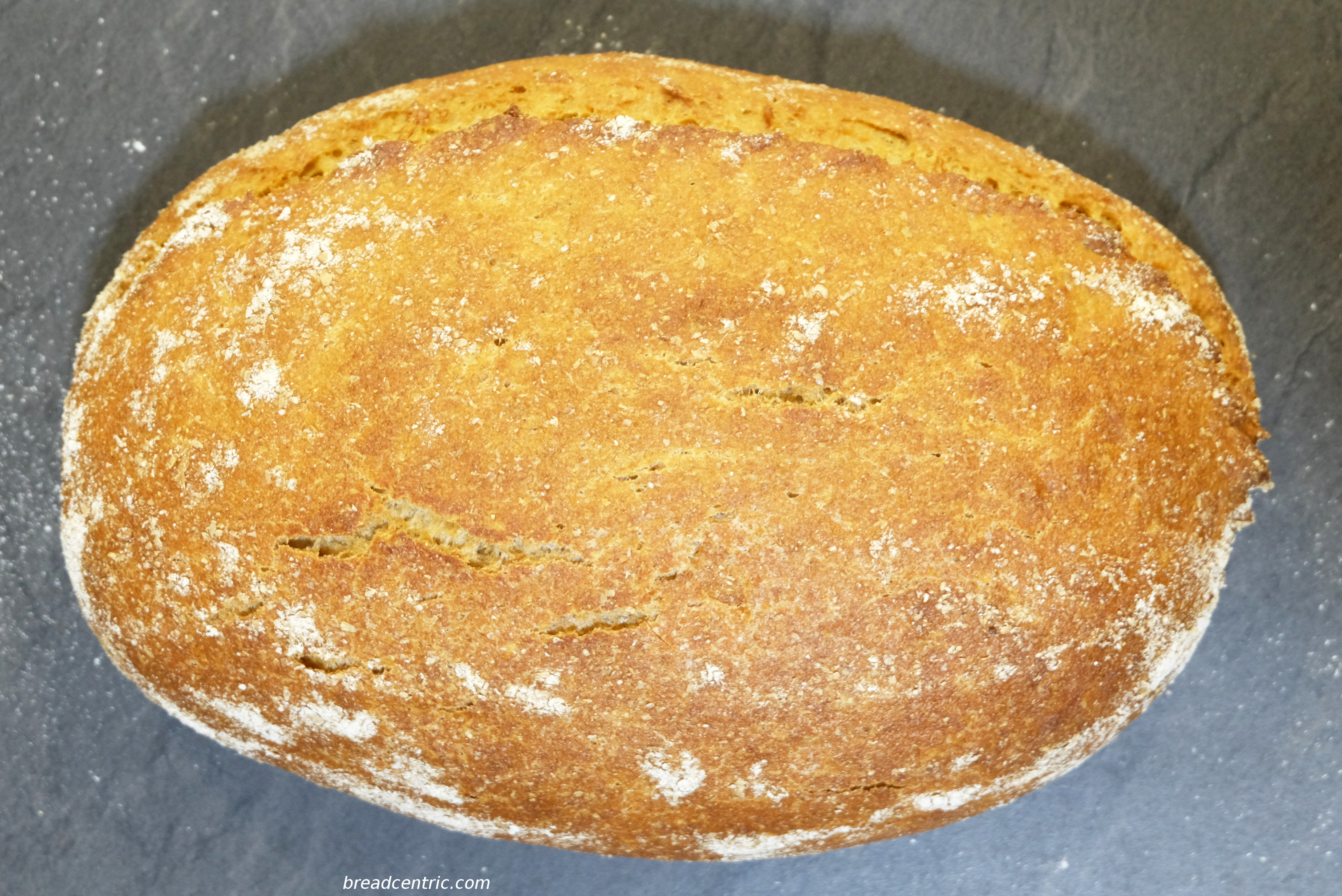
Khorasan wheat bread
My oven is usually forming the crust quickly and that’s what I experienced this time as I did not put a baking tray above it to shield it a bit. Still, it was nice and crunchy. Potentially this could have made the loaf more dense than it could be.
I overproofed it during the final rise, but not by much and it gave a bit of an oven spring with very few small unplanned cracks.
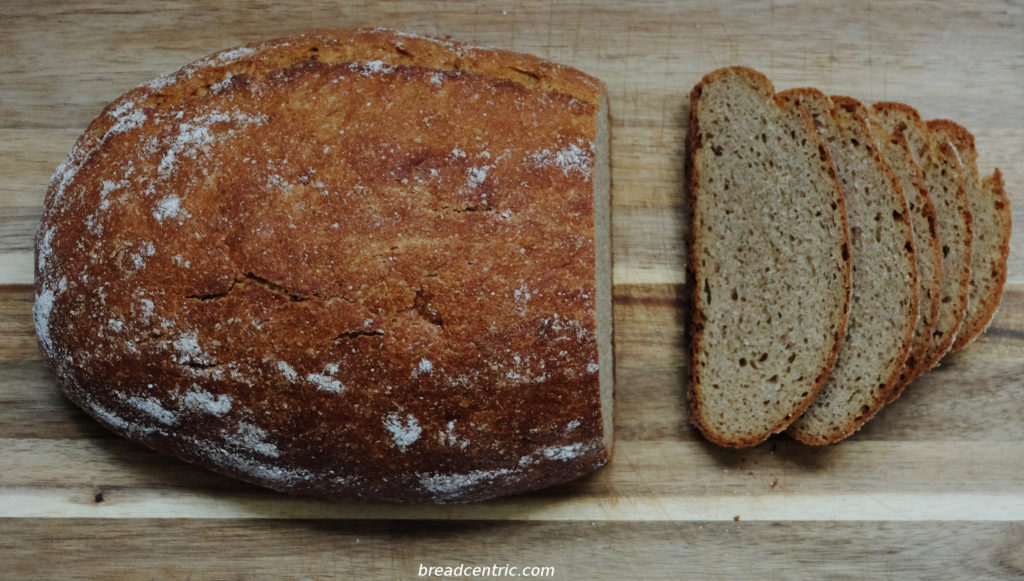
Khorasan wheat bread – the crumb
The crumb is rather dense and a bit dry – I wouldn’t have it by itself, without a butter at least. The taste is quite peculiar. Trying to find something to compare, I’d say it’s like a mixture of wheat, something like a corn flour and a bit of spinach – but this aroma was released after a couple minutes only. I had it with a horseradish soft cheese and smoked ham. Beautiful.
Now that I have the other half of the bag left, I am thinking of combining it with rye – I’ve seen a recipe for that on Bread Experience website. Or maybe I will combine it with barley and make a loaf as they used to make it in Pompei?