Pain Au Levain
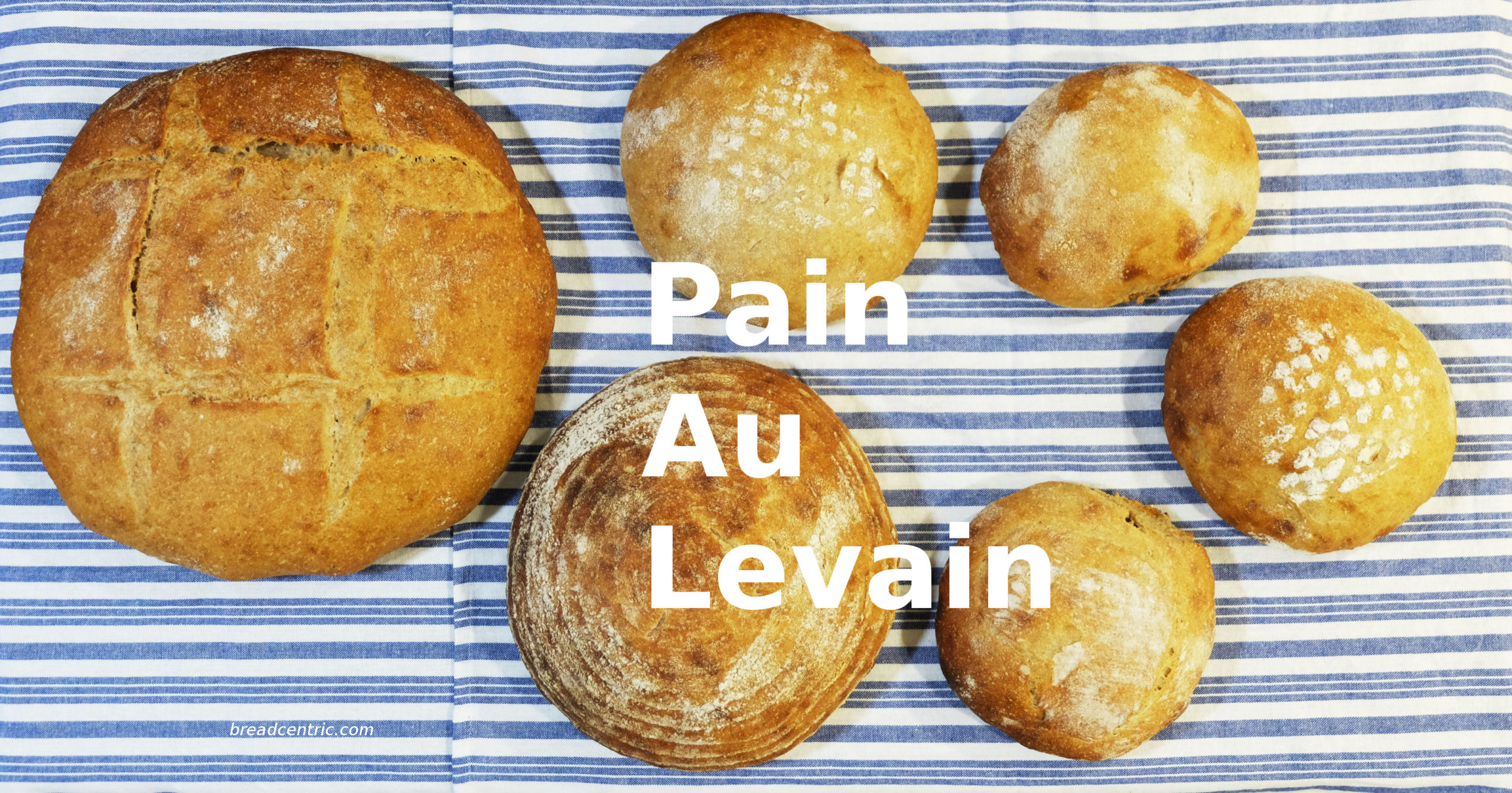
Happy Valentine’s Day! I know, it’s a bit late, but that’s when we baked these wonderful loaves. I would recommend it to all bakers learning to shape the loaves, as it’s surprisingly easy to work with.
Szczęśliwego Walentego!. Wiem że to trochę późno, ale właśnie wtedy upiekłem te wspaniałe chleby. Mogę polecić go każdemu, kto uczy się formować bochenki, ciasto jest bowiem zaskakująco przystępne w obróbce.
Perhaps you remember from the challah post that we had a Valentine’s Cake Sale at my daughter’s school. Last year we made a heart-shaped loaf, this year we decided to try a new recipe and have some fun with stencils.
A post shared by Breadcentric (@breadcentric) on Nov 22, 2016 at 12:00am PST
I’m not very confident about bread decorating and hoped to be able to improve it a bit. I made a heart shaped stencil to try out.
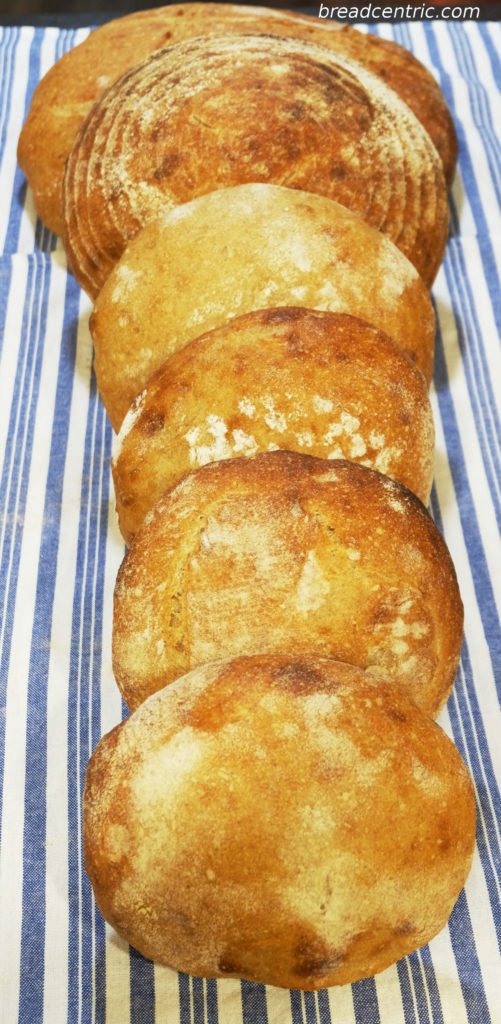
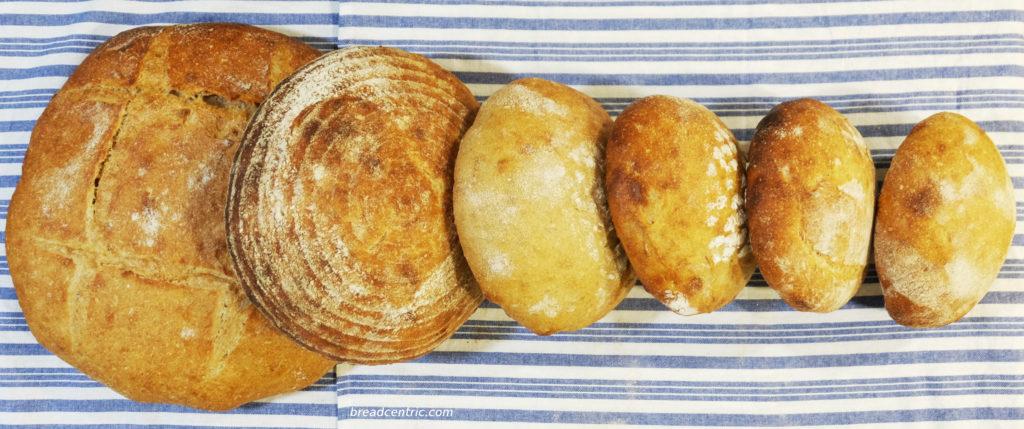
I also decided to go for smaller loaves. Last year I made one. Truth be told, the cake sale is about the sale, as it gives money to add a little extra to our kids’ school experience. It may be a day at a theatre, it can be some party. The cause is good and smaller things give more in return 🙂 That’s why I used soup bowls for proofing and made four small loaves, plus a bigger one (and even bigger for home).
This recipe has 65% hydration of the dough. This means it is a rather stiff dough. Most breads I make have a higher hydration (up to 100%), but most of them land in the baking tin. I usually struggle with loaves with higher hydration – they stick to the banneton and stuff – so I decided to take an easier one this time.
Source of the recipe is J. Hamelman’s “Bread” (Sources).
One interesting observation: J. Hamelman does not include sourdough’s content when calculating the hydration. I guess it’s simply the way it should be done. Sometimes when I bake Simple rye bread, I need to halve the sourdough content because it may rise too quickly – it means removing 100 g of sourdough from the final dough. I then replace it with equivalent mixture of flour and water. I would expect this to be included in the hydration calculations. Apparently I shouldn’t. Not that it changes anything when mixing a 100% hydration dough with a 100% hydration sourdough.
Pain Au Levain
Planning
The bread takes under 20 hours from nothing to ready loaves: 12 hours for the levain, up to one hour autolyze, 2.5 hours proofing, 2.5 hours proofing again, 40-50 minutes baking.
I recommend having some rice flour at home for dusting, as nothing sticks to it. If you use a kitchen towel in the bowl for proofing, it will also be easier to get rid of the excess rice flour and during washing the remains will not form dough strings in water.
Ingredients
Makes 1.5 kg dough, which I usually place in two smaller bannetons or a single bigger one.
Levain
- 130 g strong white wheat flour
- 10 g light rye flour
- 90 g water
- 30 g stiff sourdough (Mr Hamelman defines it as sourdough with 60% hydration; I usually don’t bother, my sourdough is 100% hydration; 30% of his stuff is about 20 g flour and 10 g water, mine’s 15 g flour and 15 g water; while it can mean some properties in sourdough aren’t boosted as much as he would prefer, It feels that conversion – which means adding more time before making the levain – just to get 30 g of well proportioned starer is simply not worth the effort)
Final dough
- 730 g strong white wheat flour
- 40 g light rye flour
- 500 g water
- 20 g salt
- 230 g levain (I use whole 260 g as I don’t need a bit to start another levain)
Recipe
Mix the levain and leave covered in room temperature for 12 hours. . If you need more time, add a bit of salt from the final dough to the starter (not more than 4-5 g)
Mix everything apart from the levain and salt in a bowl until it incorporates all the ingredients. Make sure there isn’t any flour left at the bottom, it may leave you with white flour spots in the dough. Leave for 20-60 minutes for the autolyze
Sprinkle salt on the surface, then place chunks of levain on it. Finish mixing for about 1.5-2 minutes. The temperature of the dough should be around 24-25 C. Leave for bulk rise for 2.5 hours
If possible, fold after 50 and 100 minutes
Divide the dough in portions, shape it and place in prepared (dusted) bowls. As mentioned I tried proofing in bowls lined with kitchen towels and dusted with rice flour. the result was satisfying. I used about 200 g of dough for a bowl. Leave it to proof for 2-2.5 hours (until they more or less double in volume). The temperature expected is 24-25 C
Bake for 40-45 minutes in 240 C, no fan, with steam. Know your oven. If you are using a stone or a baking dish like iron cast or clay one, make sure you warm them up before placing the dough on the oven
Place on a cooling rack to cool down
Pain Au Levain
The taste is absolutely lovely, very soft and enjoyable. The crumb is rather light as well.
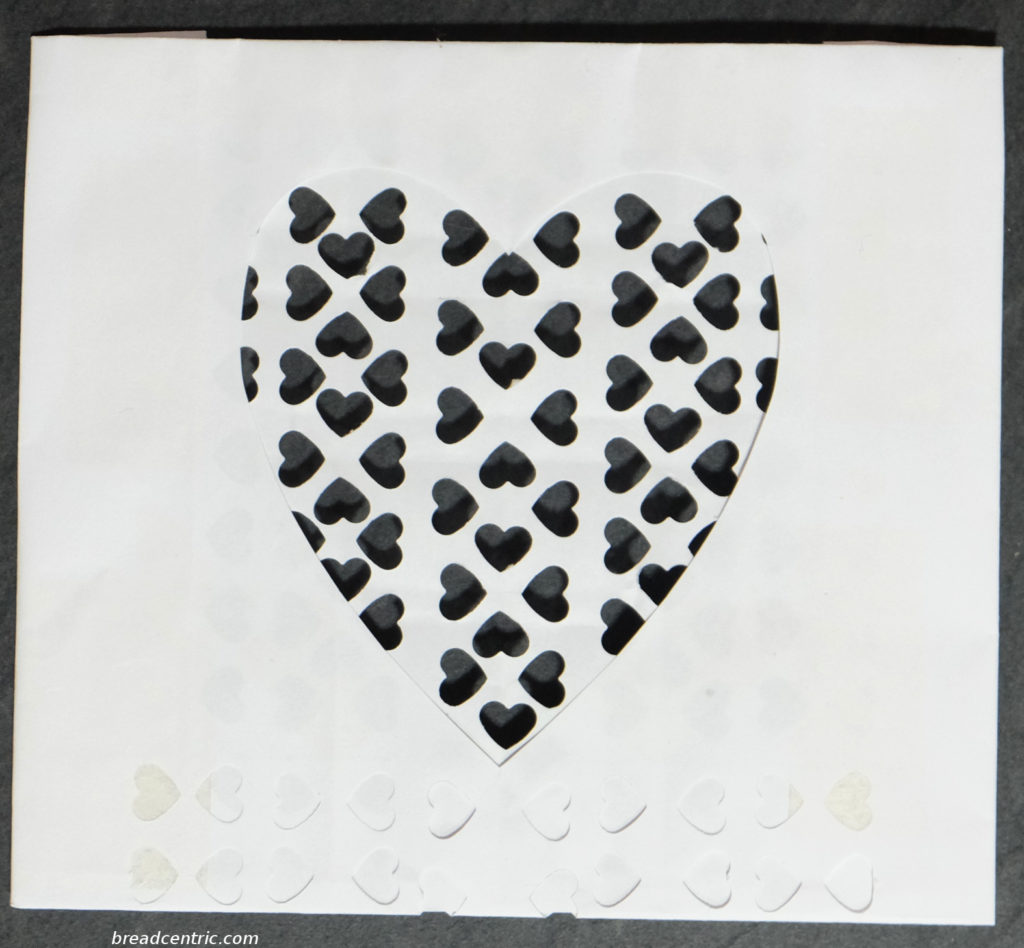
How not to make stencils
It was fun making this bread, but (as pretty much expected) the patterns weren’t visible enough. I also ruined some accidentally. I have some learning to do before I reach the level of Sourough Mania on Instagram:
A post shared by Anita Šumer (@sourdough_mania) on Dec 23, 2016 at 4:23am PST