Paskha. Pascha.
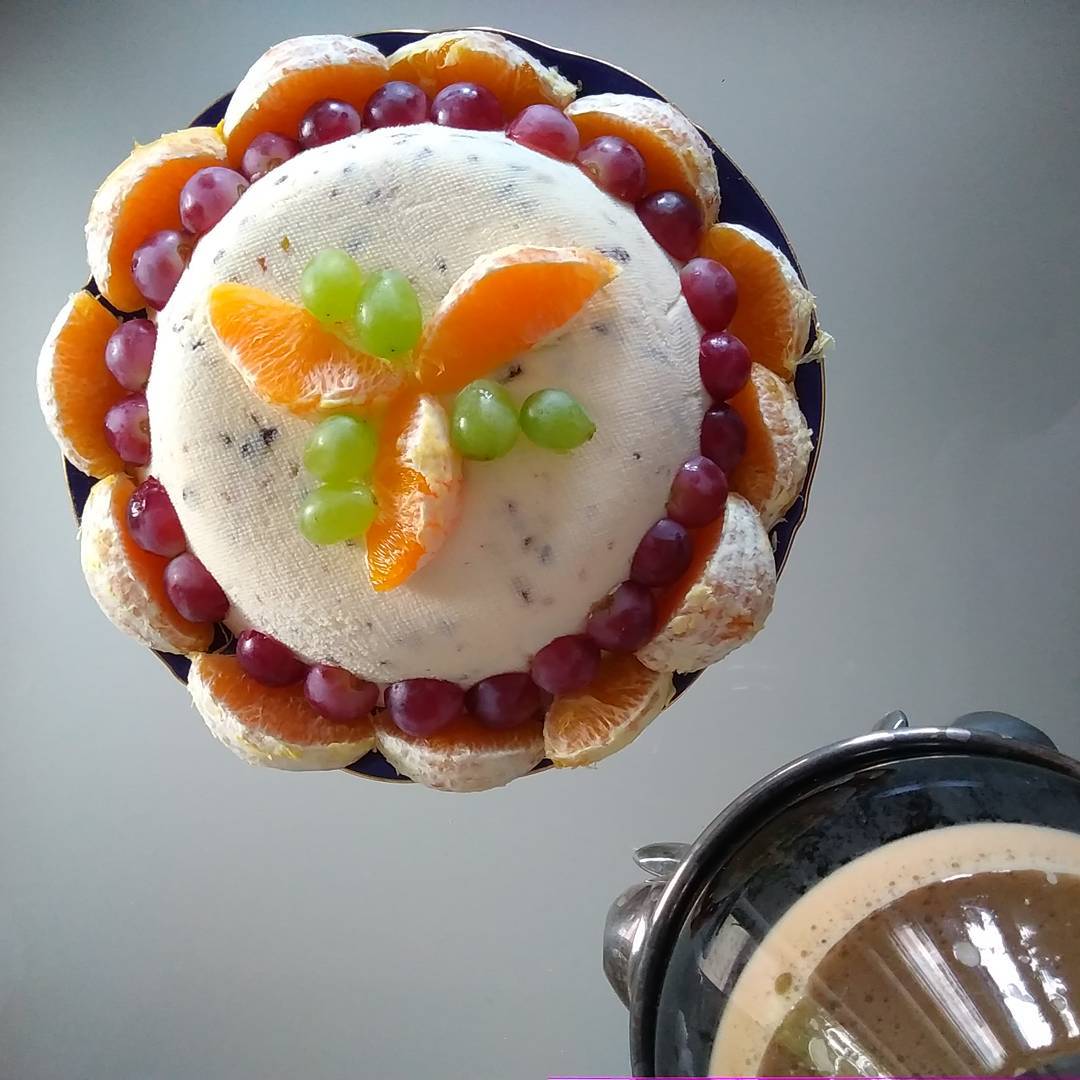
Perhaps you would like to give this dairy based Easter delicacy a try? Może wypróbujesz ten wielkanocny przysmak z nabiału?
It’s not the first post about holidays and the way my family celebrates them. As you know, food is pretty close to the centre of our celebrations. On holiday days we usually have one meal, starting in the morning and ending in the evening. It is a culmination of preparations that usually last about a week (not all of the time of course).
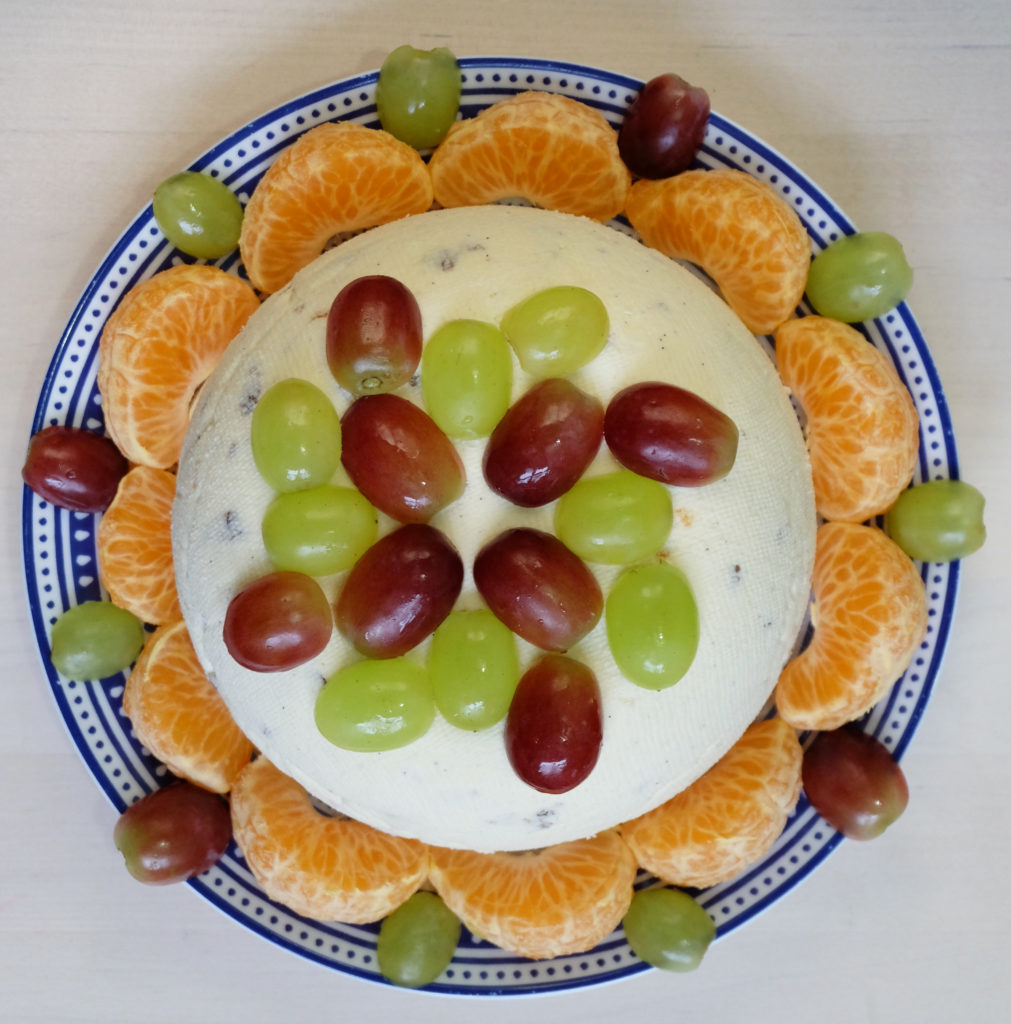
Paskha
Paskha is one of treats we make. It is made using mainly dairy, topped with sugar, raisins, orange peel and other delicious goods. Very creamy and filling so not much can usually be eaten at once. It’s usually served with fresh fruit like grapes or mandarins.
I’ve obviously spent some time watching my Mom make it when spending Easter in Poland. It isn’t very hard to make, it only takes some time and requires a couple accessories. If I managed to make it, you can as well.
Planning
On the first day you prepare the curd, on the second – the final mixture.
You will need a big pot, a strainer, at least two half-square-meter gauzes (if you want to use more bowls, you can cut it and use some pieces I used a double layer for straining the curds and same in the bowl, but maybe a single layer would be enough), bowls for cooling. You will also need some room in your fridge for cooling.
Ingredients
This was enough for two portions. We ate the smaller one at home and the bigger went to our friends for the Easter Monday party.
The curd:
- 2 l whole milk – it has been noted to. Me that it should be either fresh or pasteurised. Long-life milk tends to fail to form curd. (Thank you turok2016)
- two vanilla pods – you can also use 16 g of vanilla sugar in the next phase, or two teaspoons of a vanilla paste, or two-three teaspoons of a vanilla extract; vanilla is expensive, but I like using it this way from time to time
- 0,5 l sour cream
- 6 eggs
The final mixture:
- 250 g butter
- 250 g icing sugar (next year I’m using 200 g, and if it’s still too much, maybe I will go down to 150 g the year after)
- vanilla if you gave none in the curd
- all curd from the previous phase
- 50 g orange candied peel – I made it myself and it was so aromatic that 25 g were well enough
- 100 g chopped raisins – some are adding nuts, but I don’t like nuts in sweets too much; Magda Gessler, Polish cook and restaurant owner, recommends leaving the raisins in wine or rum overnight – if you forget to do it, you can have the remaining wine/rum with the final paskha
- 150 g double cream – well, 50.5% fat might be a bit too much, maybe a single cream would be enough (if it can be whipped)
- mandarins, oranges or grapes for decorating
Preparation
- Start heating the milk in a pot. Use small fire so that the milk doesn’t burn, but gets heated to the boiling point
- Cut the pods along their length and scoop the seeds out. Throw it all into the milk
- Use a blender, a beater or a mixer to whisk the eggs with sour cream into a uniform liquid. I recommend rinsing the eggs before using to make sure no salmonella gets through – you will be heating it all, but it’s better to stay on the safe side
- When the milk begins to boil, pour the eggs with sour cream, mix thoroughly for about a minute, then leave it so that it begins to form curds. You will clearly see a solid thing separate from a murky liquid
- When the curds form, mix it a bit, take off the heat and start transferring onto a strainer lined with a gauze to get rid of the liquid and have the curd remaining. You can leave it like that in a cool place until the next day
- Next day start with beating the soft butter with sifted icing sugar. Gradually start adding the yesterdays curd, chopped raisins and the orange peel. The mixture will be quite soft and fluffy. Put it aside
- Whip the cream. Don’t add any sugar and watch it so that it doesn’t turn into butter
- Add first spoon of the whipped cream into the mixture and mix it thoroughly, then continue adding the rest of cream but mix delicately, so that the end result is even more fluffy
- Line the bowls with a gauze, then put the mixture into them and cover it with gauze as well. If you don’t have a cover for the bowl, use cling film to cover it so that the paskha doesn’t get infused with all the smells form your fridge. Refrigerate for a day or two so that it turns solid which should happen within 24 hours
Voila! A perfect combination of cow protein, heart attack and diabetes. Serve with fruit, coffee and insulin.
It is very rich and creamy. The colour is lightly yellow, the aromas of vanilla and citruses are easily recognisable. The desert is very filling, as mentioned. The addition of fruit on a plate gives it some refreshing balance. Delicious, I’ve done it, and I recommend you give it a try as well!
