Simple rye bread
Today I’m providing one of the recipes that we worked out on our own. It’s one of those “I wonder if this works” attempts, and one of few that actually have worked. It is very simple and many people like it.
Dziś przedstawiam jeden z przepisów, które opracowaliśmy samodzielnie. To jedno z podejść typu “ciekawe czy to się uda” i jedno z nielicznych, które się udały. Jest bardzo prosty i wiele osób go lubi.
.
In fact, it is also easier to make than the one listed in the sourdough post. That said, rye is a specific cereal and I preferred to provide a first recipe that involves a proper dough.
Rye contains less gluten, and when you mix it with water, it looks like clay – it is not stretchy or springy, it sticks like crazy. In short it is far from what most would expect in their first baking experience.
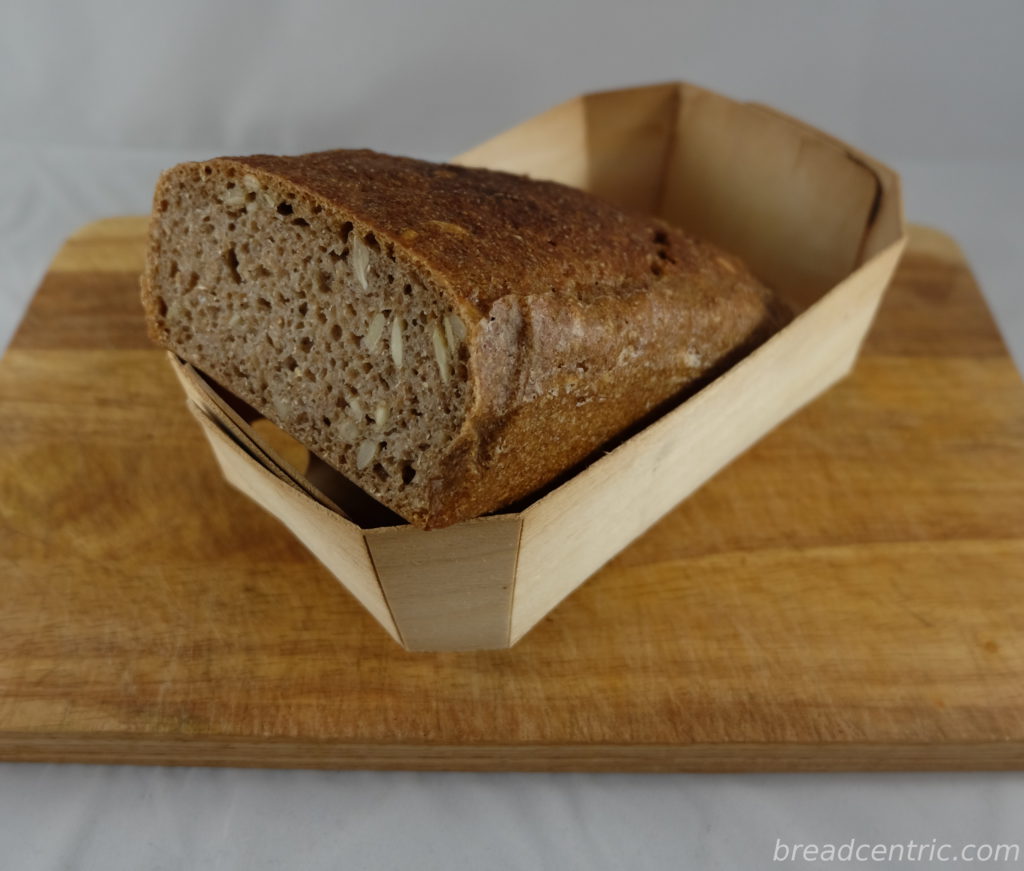
Basic rye bread
Without proper handling the outcome of baking can become what Poles call zakalec and is considered to be a spoiled bake. As far as I read (and tried), sourdough limits the impact of amylase’s activity thanks to increased acidity provided by lactic bacteria, so the result of using sourdough is better then when the one of using yeast only.
Planning
Prepare starter at least eight hours before making the bread. ***UPDATE:***One word of explanation – you can skip making the starter if you have enough of sourdough. We prepare it mainly because we would need to store about 800 g to bake as much bread as we usually do. To prepare 660 g of starter we need 120 g of starter, but even 60 g (and more time) would be enough.
Prepare a baking tin. Make sure it’s properly greased, we damaged a couple tins when we didn’t and had problems getting the bread out. It’s really that sticky. Use butter rather than oil, liquid fat almost never worked for us. If not sure, use baking paper.
We use the red loaf tins from Ikea which can easily fit all of this dough and use it as a proofing gauge. When we insert the dough, it takes up about half of the tin. The loaf is ready to bake when the dough rises to full volume. These tins are not available any longer, but just checked and they fit 1.9 l (= 1.9 kg) of water. Measure yours and scale the recipe accordingly.
You will need to wait between four and eight hours before you bake. It almost never takes longer. Almost.
Always let it cool down completely before slicing. It is very moist and not giving it time will cause it to crumble.
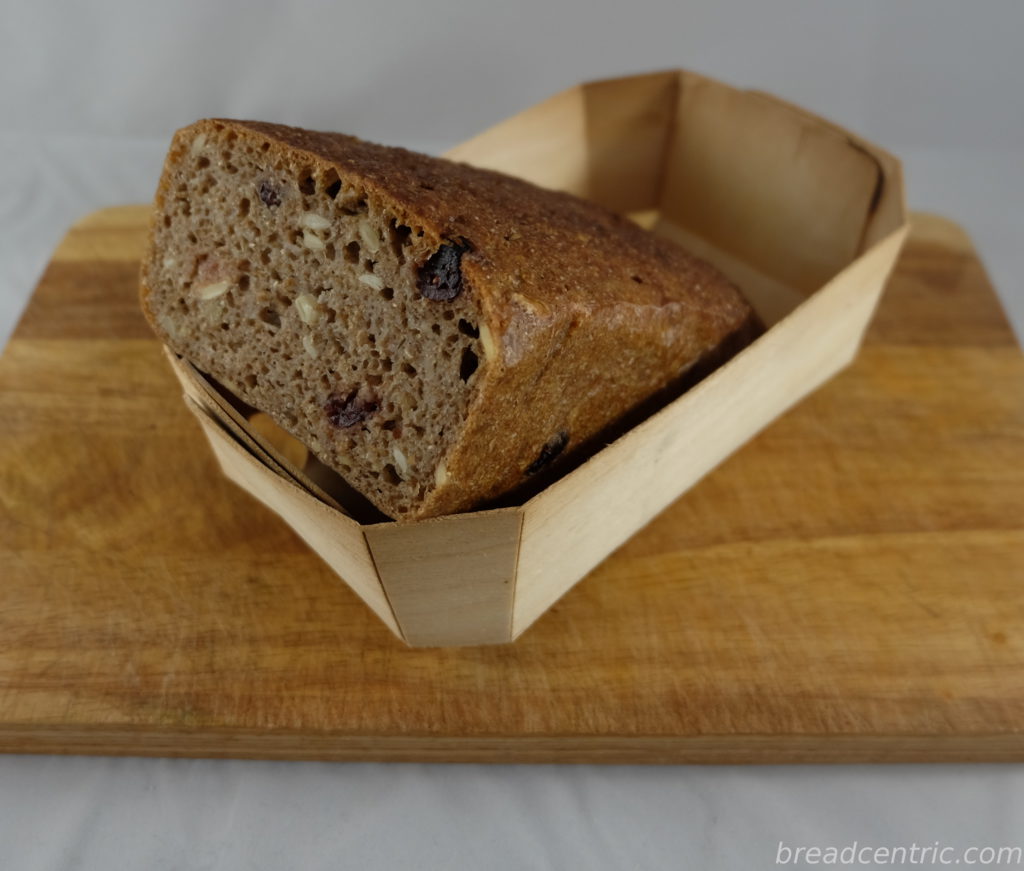
Rye bread with cranberries
Ingredients
Starter
- 90 g whole rye flour
- 90 g water
- 40 g rye starter
Dough
- 400 g whole rye flour (or light rye flour, see options below)
- 220 g starter
- 400 g water
- 12 g salt
- 50 g rolled oats
- 50 g sunflower seeds
Preparation
Prepare starter by mixing all its ingredients in a bowl. Cover with cling film and put aside for at least eight hours
When the starter is ready, mix all ingredients together. You will have a very dense clay as the outcome. Make sure it’s all mixed thoroughly
Put the dough into a prepared tin. Use wet hand or spatula to make the surface smooth. Cover with cling film and put aside until it’s ready, usually about 6-8 hours. It’s ready when the dough fills up the whole tin, or when it stops rising
We bake the bread in 150-160C with convection, for about 70 minutes. You know your oven, observe and adjust
Take it out of the tin and let cool on the rack
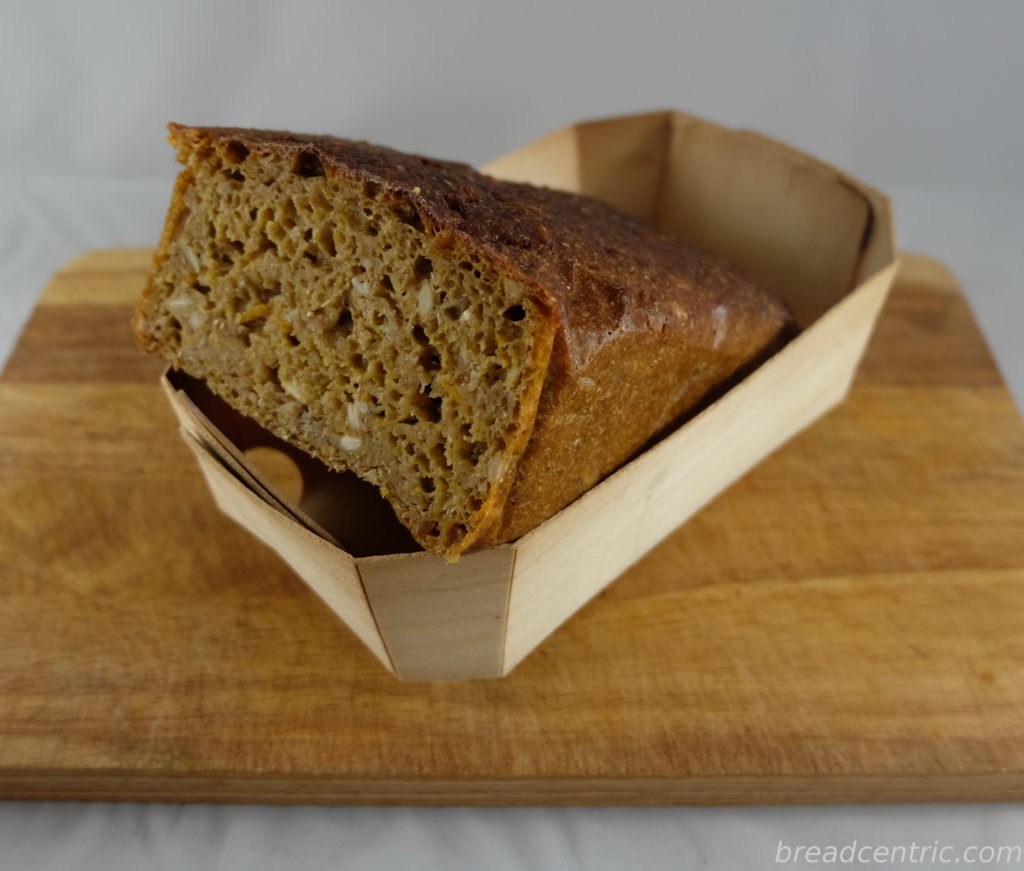
Rye with pumpkin and rosemary
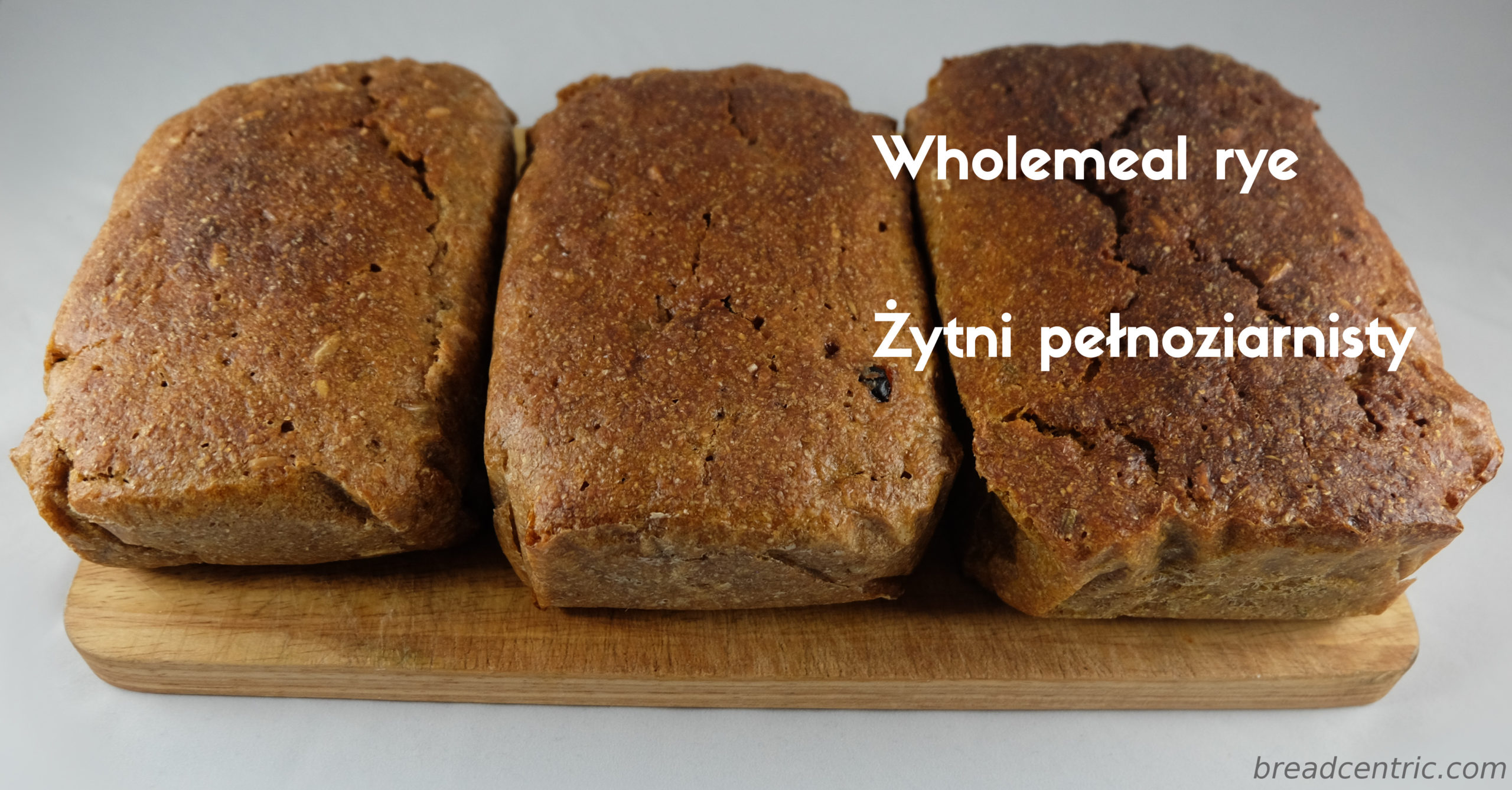
The bread comes out quite dense and moist. Using a blunt knife for cutting guarantees it will tear.
The taste is quite subtle and goes well with anything. If you prefer more of a flavour in it, add a spoon of caraway seeds or a handful of dried cranberries (better without sugar), or some pumpkin mash with rosemary (two-the branches at most). In the last case reduce the hydration. I would suggest removing as much water as you add the mash.
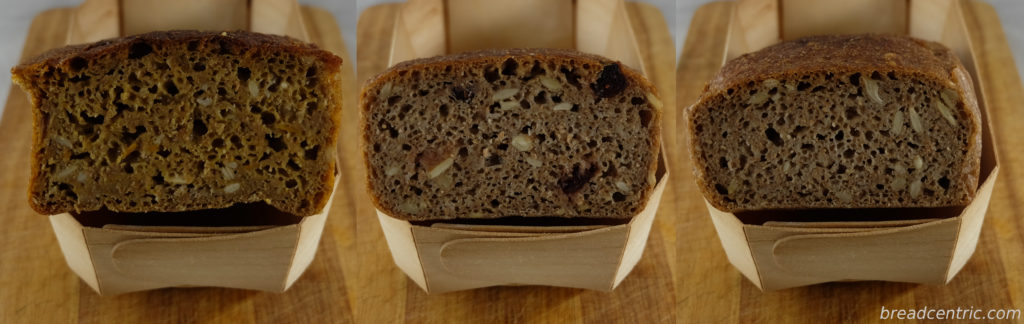
Rye bread: with pumpkin and rosemary, with cranberry and basic
The amount of water in the recipe is quite important. The more water the more delicate the crumb, but also more prone to tearing. The main modification to this recipe that we did was reducing hydration to current state. If you want to try however, add 50 g of water. The dough will also be less dense and easier to handle.
Options
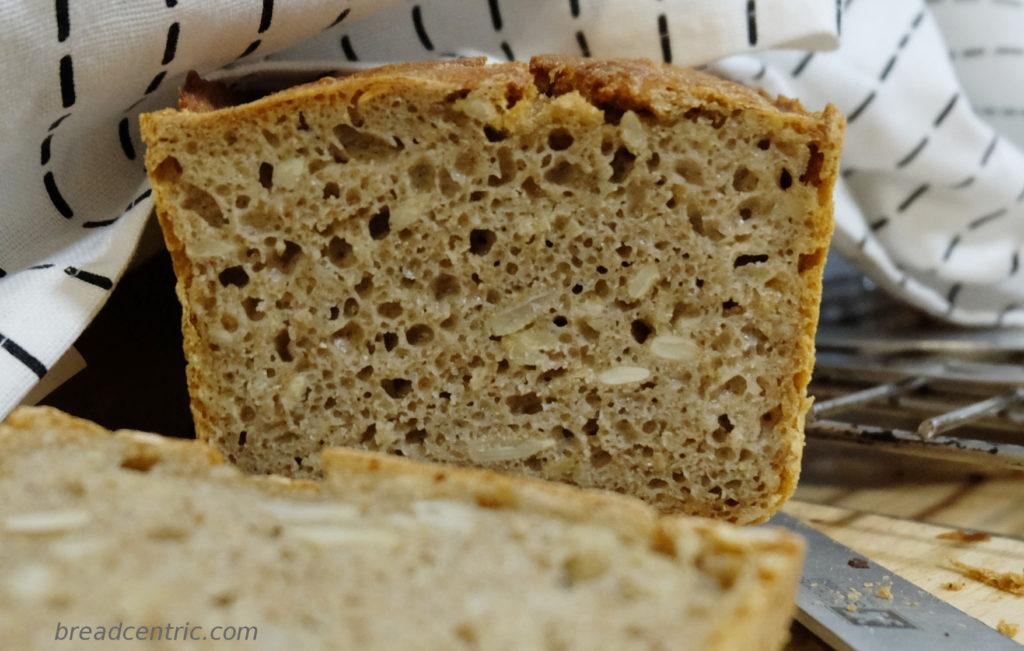
Rye bread with light rye flour
Recently we replaced whole rye flour in the dough with a light rye flour. The result was significantly lighter, though still quite moist and intense in taste. A pleasant experiment.
A photo posted by Breadcentric (@breadcentric) on Dec 30, 2016 at 1:23am PST