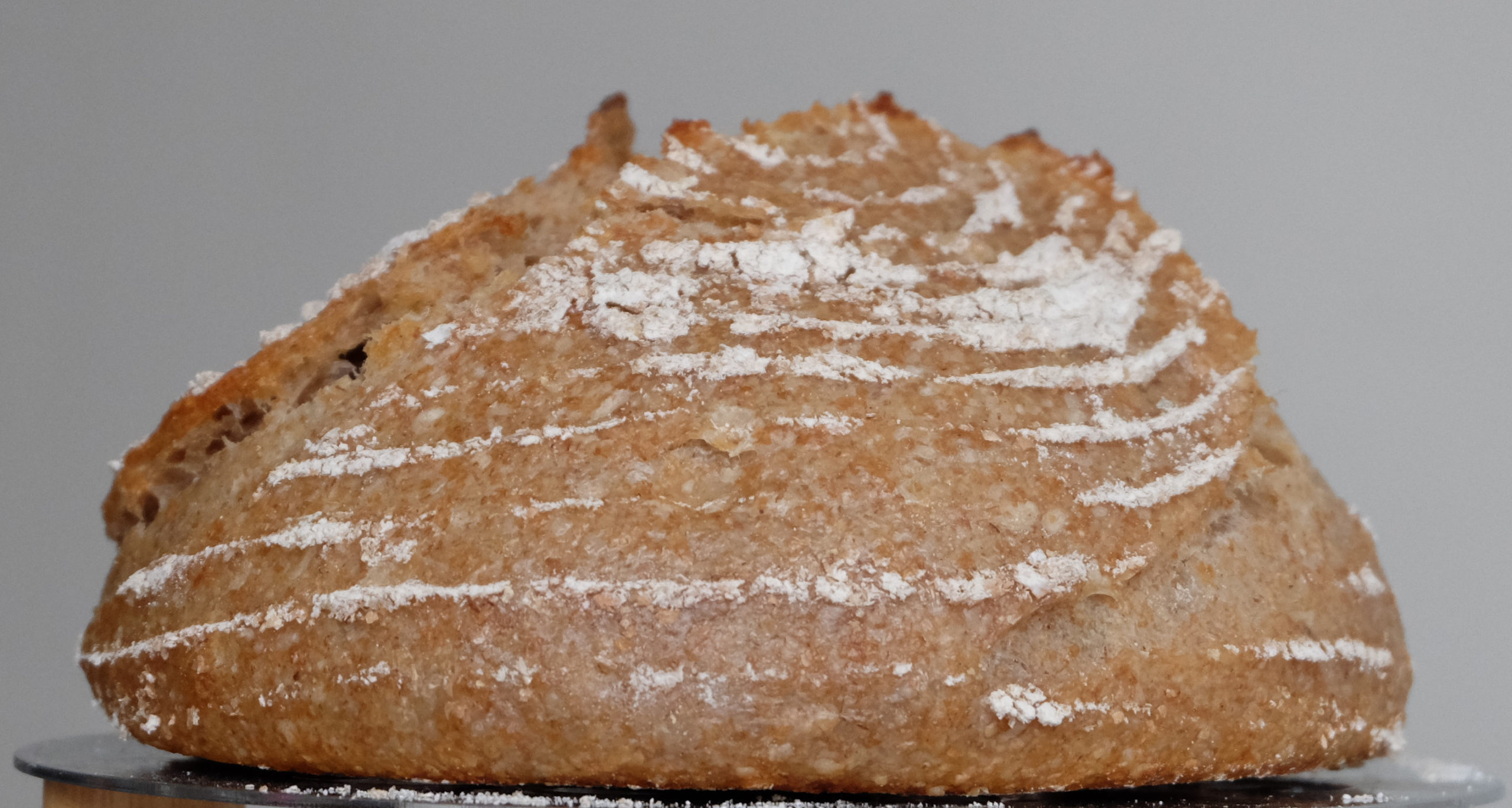
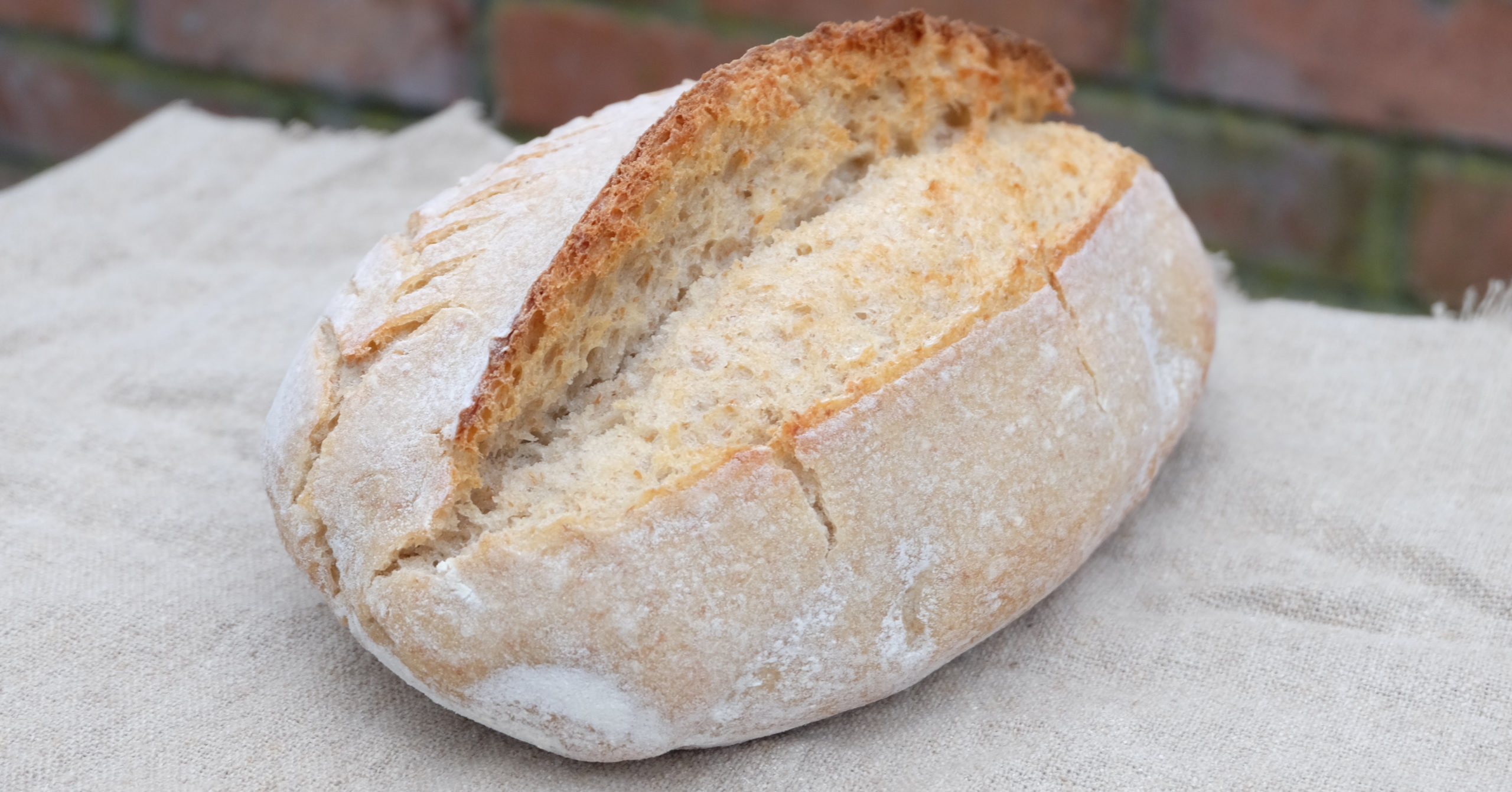
Three-phase starter rye-wheat sourdough
Jakieś dwa lata temu próbowałem upiec chleb 100% żytni, ale taki formowany, nie z foremki. Pamiętam że wyszedł bardzo smaczny, ale nie potrafiłem znaleźć nawet jednego zdjęcia. To nie jest ten chleb, ale postanowiłem sobie przypomnieć metodę.
About two years ago I tried to bake a 100% rye bread, but you know, a shaped one, not from a tin. I remember it was very tasty, but couldn’t find a single picture. This isn’t that bread, but I decided to retry that method.
The whole trick is to make a three-phase levain:
Very little well hydrated levain with a bit of starter in an ambient temperature – to activate yeast
A bit more of a dry levain in a slightly increased temperature – to activate vinegar bacteria
A lot of active levain with 100% hydration – to activate lactic bacteria

Three-phase rye-wheat sourdough
Then the dough gets mixed, left for a short proof, shaped and then rather quickly baked in a high temperature.
I was relying very loosely on a recipe from a blog called Nasze życie od kuchni(sources). Because I wasn’t following it very precisely, the hydrations of subsequent phases weren’t perfect. Next time I will use recipes from J. Hamelman. Despite that, the bread was marvellous.
I decided to use 20% wheat flour.
I’ll briefly mention spreadsheets. I use them when I have to calculate certain ratios. I knew I would use 20% wheat flour, that salt would be 2-2.5% of the flour’s weight. Now I could easily decide how much dough I will end up with and how not too make too much starter. I could also control the hydration. If I prepared this spreadsheet earlier, I wouldn’t have wasted any flour or water. I also would spot the slightly wrong hydration values in the levain.

Calculating the recipe in a spreadsheet
Planning
Preparing the levain takes 23-34 hours, proofing and shaping takes 1.5 hours, baking takes an hour, resting (if you let it rest) – 24 hours.
Be aware that the levain is quite active and there will be a lot of it. Make sure you get a big bowl.

Three-phase rye-wheat sourdough
Ingredients
Enough for three loaves of about 700g.
Phase one
- 27,5 g light rye flour
- 82,5 g water
- 1 teaspoon rye starter
Phase two
- phase one levain
- 165 g light rye flour
- 110 g water
Full levain
- phase two levain
- 425 g light rye flour
- 425 g water
Final dough
Full levain
410 g light rye flour
300 g strong white wheat flour
330 g water
27 g salt
I used poppy seeds on top, but it is not mandatory

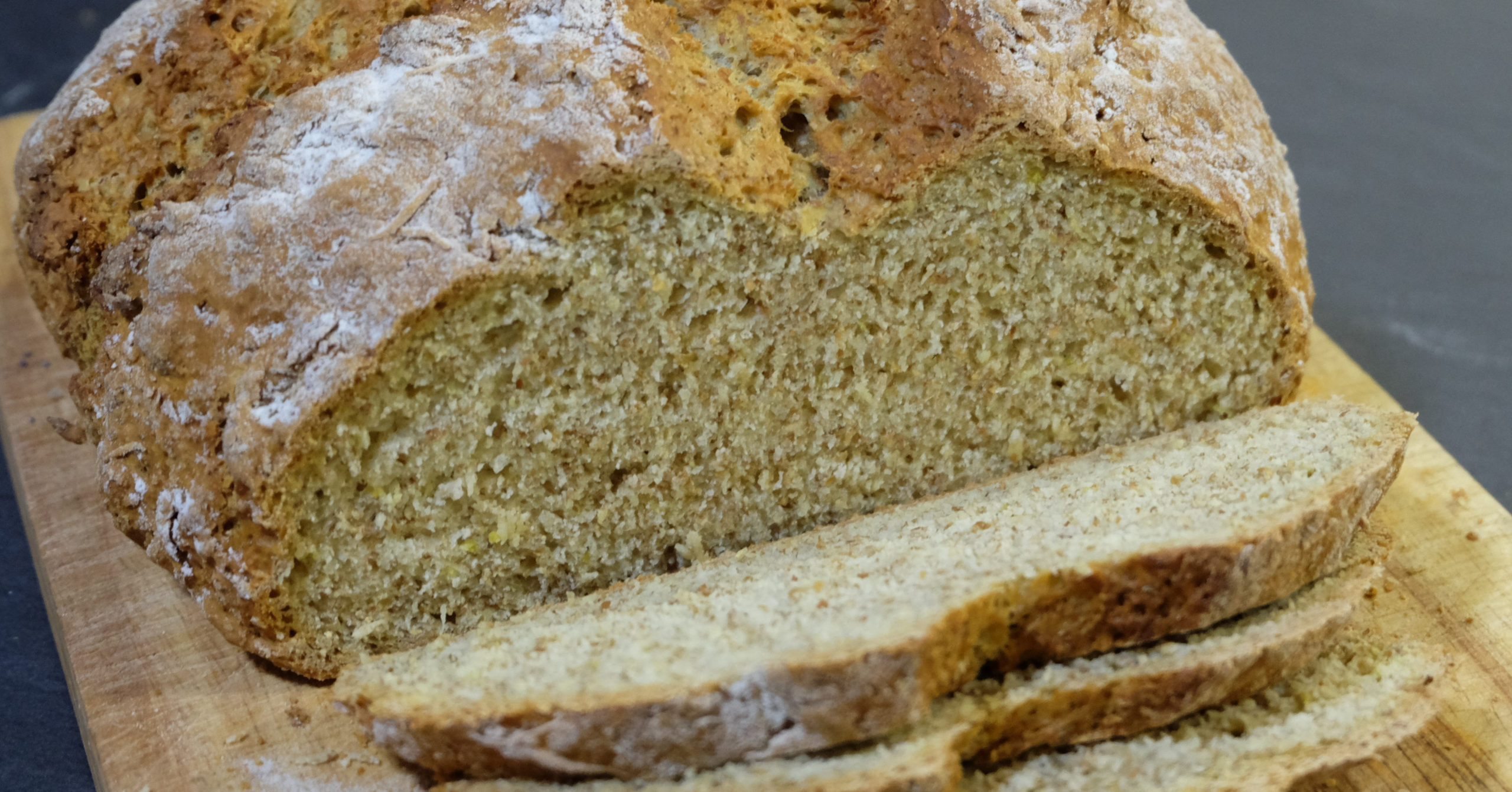
Three-phase rye-wheat sourdough – the crumb
Preparation
Mix the levain’s phase one and leave at room temperature. If it’s cold, leave it in a warm place. Come back in 5-6 hours
Add phase two ingredients. I recommend adding the water first to dilute the levain and then add flour. You could actually add some 50 g from final phase here and remove in the following step. Leave for 15-24 hours
Mix the final levain. Leave for 3-4 hours
Mix the whole dough and leave for about 20 minutes. Remember that the levain is very active and will rise aggressively, and rye is full of enzymes that make the dough very fragile. It will fall apart and won’t hold any structure
Split the dough into two-three parts, carefully shape loaves (remember, it’s fragile) and proof it in a banetton or a tin like me. In the original recipe there was advise to proof it for over an hour, but I gave it one hour precisely as it was quite hot on that day
Set the oven to 250 Celsius degrees with a bottom heater only or some 220 Celsius using a fan-assisted program. If you use a bottom heater, make sure there is some baking tray between it and the breads to screen the heat and make sure it doesn’t burn. Prepare a tin or a dish for steam
When the bread is proofed, put it in an oven with steam and bake like this for 10 minutes. Next release the steam, reduce the temperature by 30-40 Celsius degrees and bake for 40-50 minutes. The author suggests leaving a finished bread for 24 hours in a tea towel. After that time we had half of a loaf left. I don’t know what benefit this resting brings – maybe extended shelf live?

Three-phase rye-wheat sourdough, toasted, with a home-made ham
The bread was very tasty. One was gone after breakfast. Very moist, a little bit dense, but much lighter than the simple rye bread.